The Trillion Dollar Asset Class Nobody Can Insure
Data centers can't get insured. Not at the scale being built. Not even close.

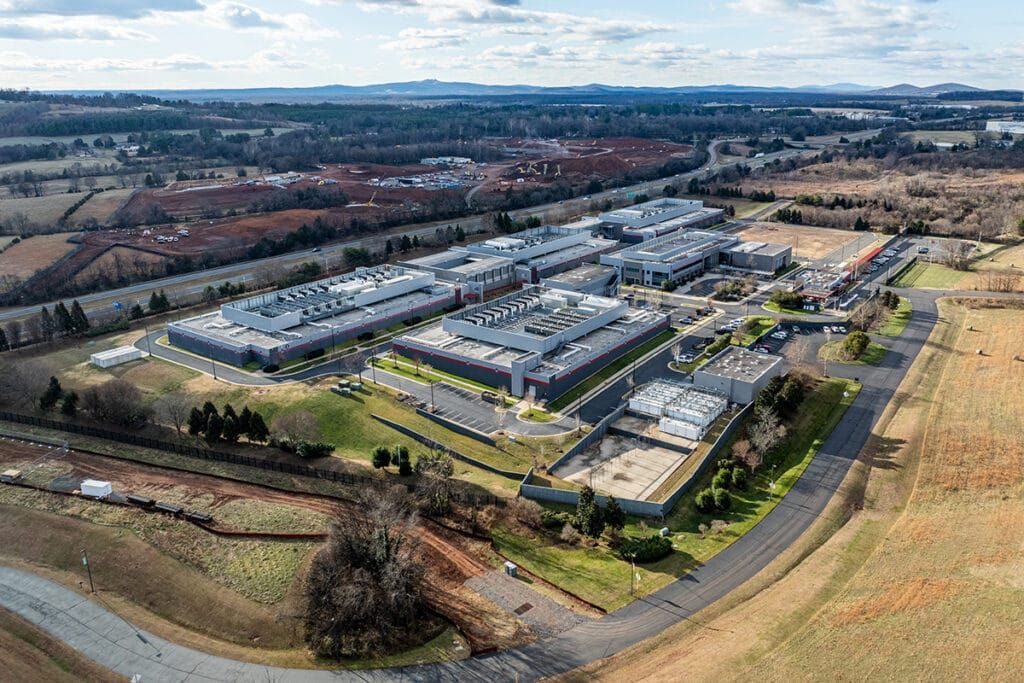
There's a new type of asset that is sucking up resources and attention alike. Its builders can't build them fast enough, its neighbors can't stand them, and despite heated debates over whether or not they should exist, massive campuses are seemingly erected overnight in communities that never asked for them and weren't built for them.
I'm talking, of course, about data centers. The infrastructure backbone crucial to power AI is everywhere and all at once. Dell'Oro Group estimates that global data center capex is on track to exceed $1 trillion in 2026. The largest campuses under construction today represent more than $20B in construction cost alone, double once equipment is installed. That's more value than some downtown skylines. But while hyperscalers and local communities battle it out over data center construction, there's an undercurrent threatening the entire buildout.
Data centers can't get insured. Not at the scale being built. Not even close.
It's a problem the entire industry is grappling with, but few VCs see. How do I know this? Well, I asked.
Last month, I hosted a dinner bringing VCs, insurance operators, and founders together to discuss property risk data infrastructure. Rolls off the tongue the title does not, but somewhere between the Parker House Rolls and the sea bass, investors who track every megawatt of the AI buildout admitted they'd never asked a basic question: who's insuring all of this?
To start, it's virtually impossible for carriers to fully insure data centers today because the exposure is simply too high and the data needed to underwrite the risk is too sparse. At $40B in concentrated value, a single natural disaster can wipe out entire P&Ls. Insurance works because risk is spread across geographies and values are distributed. With data centers, everything is right there. Say a fire breaks out because the lithium ion batteries overheat on the server racks. Top GPUs can cost over $25,000 each, and a single server rack can house up to 144 of them. That's half a million dollars per rack, and a data hall holds hundreds of racks. Swiss Re estimates that fires alone make up 42% of data center loss cost. But perhaps more than the equipment itself is the cost of business interruption (BI). Indeed, BI claims are a top driver of total loss cost, since even a few hours of downtime can amount to hundreds of millions of dollars in losses.
These assets are new, their construction processes and requirements are different, and the loss history behind them is thin. What's more, the frontier of data centers (Starcloud and Google's orbital space compute efforts; China's underwater facilities) is moving away from insurability, not closer. That's a data problem, not a modeling problem or an appetite problem. And nothing makes insurers more nervous than a lack of data. No one wants, nor can bear, the concentrated exposures these buildouts are creating. Here's how inadequate insurance capacity hurts each constituent:
Hyperscalers
S&P Global Ratings estimates that only one third to half of total campus values are insured using conventional insurance structures, with the balance effectively retained by hyperscalers like AWS, Google Cloud, and Meta. Self-insurance is a difficult proposition because it presents a brutal calibration problem. Reserve too much capital and your cash sits trapped in captives and pools, unavailable for the most capital-hungry buildout in corporate history. Reserve too little and a single large loss lands directly in the earnings report, where markets punish surprises without mercy. Unpredictability threatens finance teams as much as the loss itself — and with almost no loss history behind these assets, unpredictability is the only guarantee.
There's a second problem: hyperscalers are not insurance companies. They can and do work with actuaries, risk managers, brokers, carriers, and other experts to navigate this new self-insurance paradigm, but it's not their core competency. There's a reason insurance is one of the most enduring industries on earth. Predicting losses profitably is hard and expensive. Hyperscalers are now doing it as a side gig.
Mid-Tier Builders
Not all data center builders and operators are hyperscalers with large balance sheets to absorb losses. Mid-tier builders are particularly vulnerable to the insurance capacity problem for three reasons. First, mid-tier builders typically develop each project through a special purpose entity, which is thinly capitalized with no parental guarantee. This means self-insurance is not an option the way it is for hyperscalers. Second, lenders like Blackstone require insurance to close debt, so when insurance is unavailable or insufficient, projects stall or get declined all together. Underinsurance is actively slowing buildouts today, which makes the AI race even more of a rich kid's sport. And finally, data center designs are increasingly specced around specific GPU generations. Every month a project stalls waiting on insurance placement is a month of depreciation against hardware that turns over every 18–24 months. It's another clock on the project that no one's watching.
Insurers
Insurers aren't walking away from data centers because they want to. They're walking away from risk they can't price, and they're leaving an enormous premium pool on the table to do it. According to the Swiss Re Institute, global premiums tied to data centers are expected to reach $24.2 billion by 2030, up from $10.6 billion today. If S&P is right that only a third to half of campus values are conventionally insured, the addressable market is a multiple of what's being written today. For anyone keeping score, that's a multi-billion dollar market waiting on a data problem.
No one feels sorry for insurance companies missing out on more premium. But capped capacity doesn't just cap insurer revenue. It caps what's recoverable when something goes wrong, and the people who discover that last live next door.
Communities
The story of data centers is as much about their effects on the communities they occupy and the massive toll they take on local resources, as it is about the costs to build them. Today, roughly two-thirds of planned data centers in the US are slated for areas that were in drought within the past year, as reported by the Guardian. Large campuses can use upwards of 5 million gallons of water a day to stay cool. The long-term environmental impact of increased water demands is not yet quantifiable, which also means it's not yet insurable. In the short term, though, increased demand on water will drive up its cost, leaving residents and ranchers to pay the price for having thirsty neighbors.
In West Virginia, heavy rain caused a breach at the construction site of the Monarch Compute Campus, a project between AI company Nscale and its development partner, flooding the garages and crawlspaces of neighboring homes. Residents at the same site describe equipment running seven to seven, shaking their houses hard enough to jar pictures off walls, and homes that are now harder to sell.
The developers in the West Virginia story agreed to pay for the damages. The next one might not be able to. Most of these campuses are built through project entities with thin capitalization, carrying liability coverage constrained by the same pricing problem this piece describes. Executives at carriers actively writing this risk say the hesitation is simple: the environmental exposure is legally undefined, the legislation is still being written, and no one can price what no one can define. A judgment you can't collect is a harm you absorb.
A project entity might be able to eat the cost of a few flooded garages, but it cannot pay for the lasting environmental damages its data centers might inflict on a region. It can't do it. Neither can AWS, or Meta, or Google. Not without adequate insurance coverage.
To be sure, the industry isn't throwing up its hands in defeat. Carriers are working with more sophisticated actuarial models to calculate estimated maximum loss to inform limits rather than offer full-value limits. Parametric insurance is another modern instrument that pays out based on pre-defined triggers instead of losses, albeit at pre-established limits that cannot cover the cost of the entire build. But limiting coverage is the industry routing around the data problem, not solving it.
Creative as these emerging structures may be, they're not enough. For the coverage gap to be fully addressed, more data needs to become available and the data needs to be underwriting-grade: granular enough, current enough, and credible enough to defend in a pricing decision. That last piece is important, because it's not a failure of will at the carriers, it's structure. Loss data lives in proprietary silos, innovation moves at the speed of regulatory filings, and no single carrier sees enough of this risk to build the full picture alone.
So who moves first? Not the admitted market, where rates must be filed with every state a carrier operates in — a market that adapts in decades. The likelier first movers are MGAs with a proprietary data edge: managing general agents who underwrite on behalf of carriers, often on non-admitted paper, and who can turn new data into new capacity in years instead of decades. I know, I know, MGAs are too small to insure data centers. But that's not their job. Large property programs are already layered markets where no single carrier writes a mega-risk alone. The MGA's job is to be the proving ground, a "pilot" if we're using SaaS terms. The goal is to write a small slice with a proprietary data edge, underwrite it profitably over a few renewal cycles, and prove to reinsurers and carriers behind them that the risk can be priced. The MGA doesn't add capacity by bringing capital, it adds capacity by convincing capital that was previously unwilling. Examples of successful MGAs include Kin for Florida homeowners, a market everyone else fled, and Coalition for cyber liability insurance, the data center of yesteryear. Data centers are waiting on the same play.
Whatever form the new entrants take, one thing is clear: the only way to increase property insurance capacity is by having underwriting-grade data. I'm talking property-specific, site-specific, equipment-specific data that is continually updated. That's what it takes for the house to bet billions. It also takes builders designing for insurability from day one: fire suppression engineered for lithium-ion, compartmentalization so a single thermal event doesn't take the whole hall, sensor infrastructure that doubles as underwriting data. The sensors are the flywheel because the same sensors that prevent losses also generate the data insurers need.
On the liability side, legislation, threats of moratoriums, and increasing hostility against data centers are forcing builders and operators to practice radical transparency, or risk being shut down. Documentation of siting decisions, ongoing environmental studies, and impact commitments need to be made public. This isn't to the sole benefit of the public. The documentation that builds trust with a community is the same documentation that defines the environmental exposure. Making it known also makes it priceable. Legislation will eventually mandate most of this anyway. Might as well get ahead of the game and increase capacity along the way.
Data centers are here to stay. The trillion dollars a year being spent on them says so. These structures will continue to get built at breakneck speeds with or without adequate insurance. For everyone involved, it's much better to do it with.
But the only way to shore up the coverage gap is to address the problem in a specific order: data first, then pricing, then capacity, then trust. Communities and regulators don't extend trust to an asset class they can't see inside. Neither do underwriters. The house is ready to bet billions. It's waiting to see the odds.